Contact Info
- B.C.A Bachelor of Computer Applications
- B.Sc Computer Science
- B.Sc Information Technology
- B.Sc Computer Science (Artificial Intelligence & Data Science)
- B.Sc Costume Design & Fashion
- B.Sc Electronics
- B.Sc Maths (Computer Applications)
- B.B.A (Business Administration)
- B.Com (General)
- B.Com (Computer Applications)
- B.Com (Professional Accounting)
- B.Com (Corporate Secretaryship)
- B.A English Literature
💼 Department of Commerce (General)
About the Department of Commerce
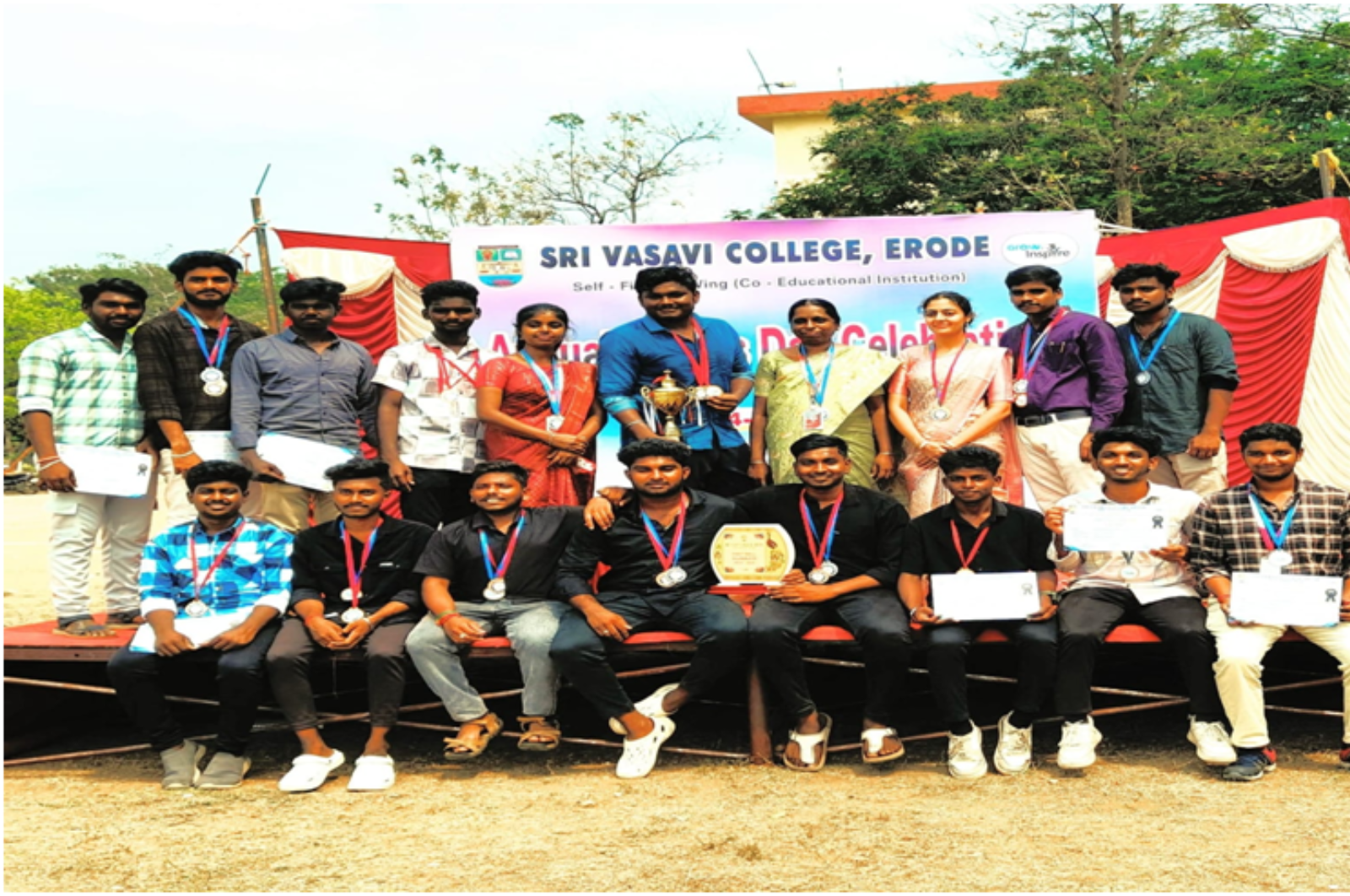
The Department of Commerce was established in 1994–1995 with 13 students and one staff member. Over the past 30 years, it has grown to 109 students with four staff members, including the Head of the Department. The department currently has 62 boys and 47 girls.
It provides quality education in commerce, finance, accounting, taxation, economics, and management. The department aims to develop both theoretical knowledge and practical skills to meet modern business challenges.
With a well-structured curriculum, seminars, workshops, industrial visits, and value-added courses, students gain analytical, communication, and problem-solving skills. They are also encouraged to pursue professional courses like CA, CMA, CS, and MBA.
Supported by experienced faculty, the department focuses on holistic development and prepares students for careers in banking, corporate sectors, teaching, research, and government services. The department strives to create competent professionals and responsible citizens.
About the Commerce Course
A Bachelor of Commerce (B.Com) is a popular 3-year undergraduate degree. Commerce is a wide and dynamic field of study that focuses on business activities, trade, finance, accounting, economics, banking, insurance, and management.
It plays a major role in the growth and development of a nation by supporting production, distribution, and consumption of goods and services.
Through commerce education, students learn important skills such as financial planning, business communication, leadership, problem-solving, and decision-making.
In today’s digital era, commerce has expanded into areas like e-commerce, digital marketing, online banking, fintech, and mobile payment systems. These developments have created new career opportunities.
Career options include Chartered Accountant, Banker, Auditor, Financial Analyst, Entrepreneur, Marketing Executive, and Business Consultant.
Eligibility
- Completion of Higher Secondary (+2) from a recognized board
- Commerce stream preferred, but Arts/Science students may also be eligible (as per university norms)
Core Papers
- Principles of Accountancy
- Business Organisation and Management
- Financial Accounting
- Principles of Marketing
- Higher Financial Accounting
- Commercial Law
- Principles of Management
- Business Application Software – I
- Corporate Accounting – I
- Computer Application in Business
- Company Law and Secretarial Practice
- Executive Business Communication
- Corporate Accounting – II
- Banking Theory, Law and Practices
- Cost Accounting
- Income Tax Law and Practice
- Business Application Software – II
- Management Accounting
- Principles of Auditing
- Indirect Taxes
- Computer Applications: Practical
Allied Papers
- Agricultural Economy of India
- Economic Analysis
- Mathematics for Business
- Statistics for Business
Electives
- Business Finance
- Entrepreneurial Development
- Financial Markets
Vision
- To produce graduates who are knowledgeable and skilled in their chosen field.
- To increase student graduation rates and employability.
- To pursue quality education in business and commerce.
- To inculcate creative and innovative practices in students.
- To teach, guide, and motivate students by providing quality education.
Mission
- To empower students with knowledge and practical skills in commerce, business, and economics.
- To foster entrepreneurial spirit in a global business environment.
- To provide top-quality education in commerce and business.
- To strengthen industry connections for career opportunities.
- To promote research and innovation among faculty and students.
- To enhance employability through value-based education.
- To prepare students for higher education in commerce.
Career Paths & Job Roles
Accounting & Auditing
- Accountant
- Auditor
- Tax Consultant
- Management Accountant
- Cost Estimator
Finance & Banking
- Financial Analyst
- Investment Banker
- Stockbroker
- Budget Analyst
- Bank PO
- Risk Manager
Management
- Business Development Manager
- Data Analyst
- Operations Manager
- HR Roles
- Production Manager
Marketing & Sales
- Digital Marketing Executive
- Marketing Manager
Government
- UPSC
- SSC
- State PSCs
- Public Sector Undertakings (PSUs)
Emerging Fields
- Data Analytics
- Business Intelligence
- E-commerce
Further Education
- CA, CS, CMA, CPA, CFP
- M.Com, MBA
- Data Visualization (Tableau, Power BI)
Future Scope & Growth
- High demand in finance, data, and management fields
- International career opportunities
- Upskilling improves career growth
- Scope to reach top positions like CFO
How to Choose Your Path
- Identify your interests (accounting, finance, sales, or analytics)
- Combine your degree with additional skills
- Plan long-term career goals (government, corporate, or business)
Sri Vasavi College (Self-Finance Wing), Erode stands as a distinguished temple of learning committed to academic excellence, ethical values, and the holistic development of students.
@ Copyright - Sri
Vasavi College (Self-Finance Wing), Erode Developed by
